JANUARY 2026
“Progress is being made – but not fast enough to keep up with the growing impacts of climate change.”
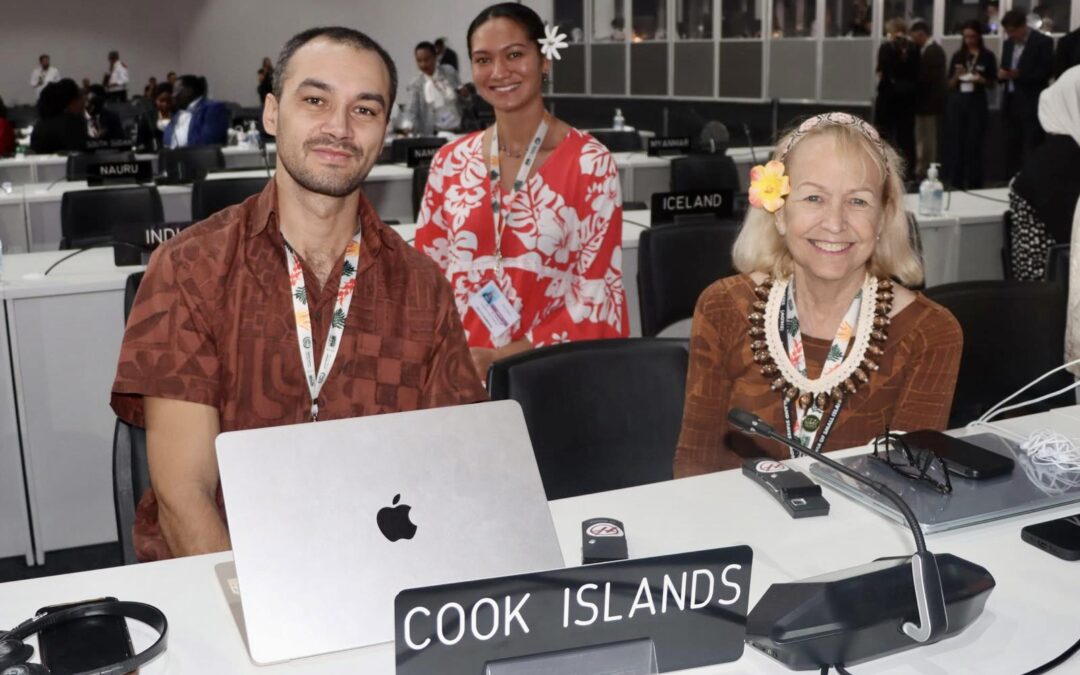
That’s COP30 in a nutshell according to Climate Change Cook Islands (CCCI) Climate Advisor Isaac Glassie-Ryan, who led our four-person Cook Islands delegation to the 30th annual United Nations Climate Change Conference (COP30). The conference was held in the Brazilian city of Belém – gateway to the Amazon – from November 10-21, with delegation costs fully funded by the United Nations Secretariat.
As at previous conferences, the Cook Islands had an active role at COP30 in shaping discussions on adaptation, climate finance, transparency and ‘loss and damage’ – which refers to irreversible harm caused by climate change despite mitigation and adaptation efforts.
The Cook Islands also continued to champion the priorities of our fellow Small Island Developing States (SIDS), participating as a member of the 39-country Alliance of Small Island States (AOSIS) and as a representative of the wider Pacific region.
Although climate finance was not the headline issue at COP30, it strongly influenced negotiations across the board.
One key outcome was the launch of a two-year Climate Finance Work Programme, designed to maintain momentum and keep political pressure on developed countries to deliver on their commitments.
The conference also agreed on a new global target to triple climate adaptation finance by 2035, helping vulnerable countries like the Cook Islands prepare for worsening impacts such as floods, droughts and sea-level rise.
In addition, the Fund for Responding to Loss and Damage (FRLD) was also launched at COP30 and is now in operation and ready to receive proposals. With the Cook Islands representing SIDS on the FRLD Board for 2026, discussions are taking place with stakeholders this month on what a proposal might look like.
Another major step forward was the agreement to develop a regular global State of Loss and Damage Report, aimed at improving our understanding of climate impacts already affecting communities worldwide.
Transparency remains a cornerstone of the COP conferences and the 2016 Paris Agreement on climate change, ensuring accountability and trust in global climate action.
At COP30, negotiations focused on supporting developing countries – particularly SIDS and Least Developed Countries – to meet complex reporting requirements under the Enhanced Transparency Framework. The Cook Islands plays an important role in this as AOSIS co-coordinator for transparency negotiations.
While all of these outcomes were significant, debates over funding levels and timelines highlighted ongoing challenges as developing countries stressed the urgency of immediate action to avoid delays. Deep divisions remain across most key issues – often between developing and developed countries, but also between large developing and small developing countries as well.
“COP30 delivered important institutional progress and kept key climate issues moving forward,” said Glassie-Ryan.
“But the pace of international decision-making continues to lag behind the rapidly escalating impacts.
“All parties are working under a system that operates by consensus, so the small steps forward are still valuable.
“Governments are building systems and processes to respond to climate change, but stronger political will – particularly from those legally required to – and faster action is urgently needed to protect communities, economies and ecosystems worldwide.